
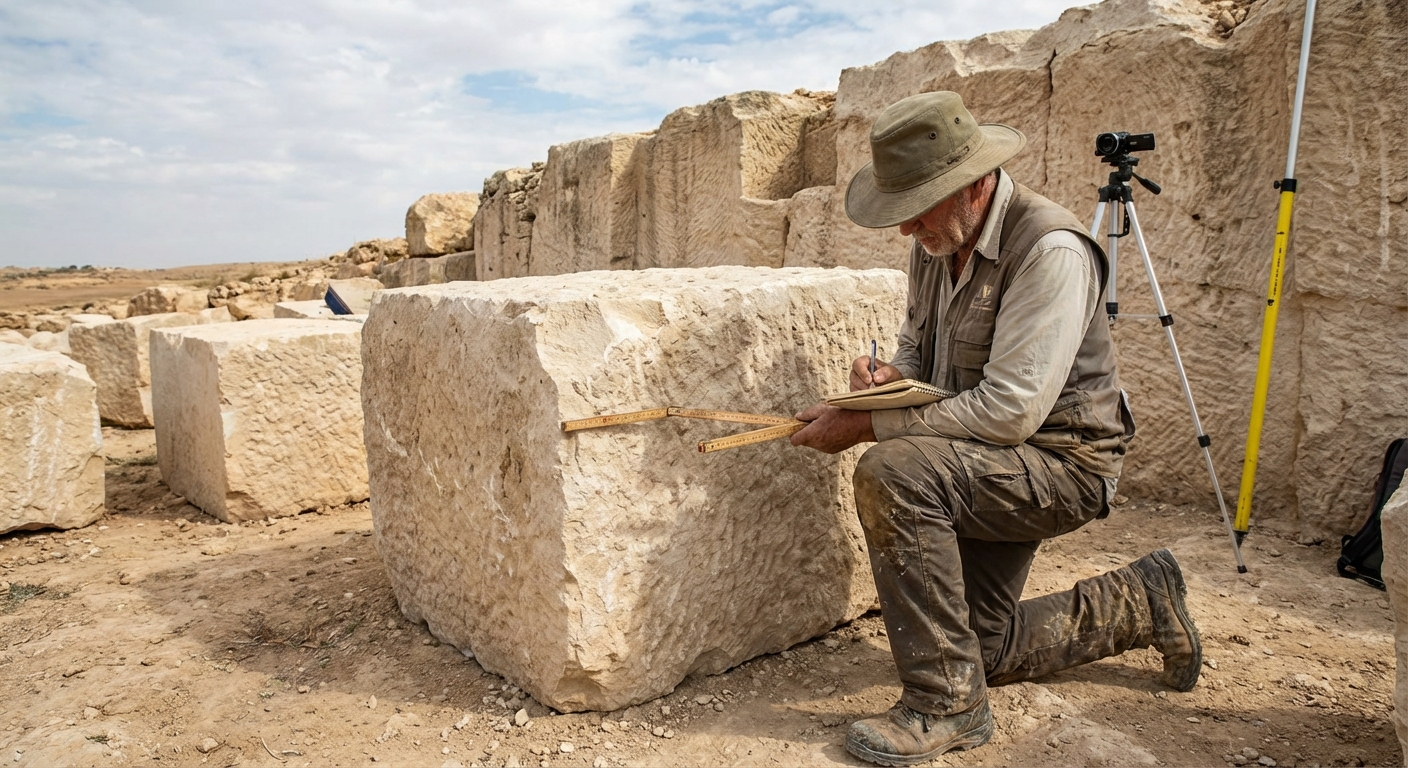
This article provides a careful, evidence-focused verdict on claims that famous ancient megastructures were built using “impossible” or lost technologies. We treat the phrase Ancient Megastructures ‘Impossible Tech’ Claims as a claim category — not as established fact — and review documented archaeology, engineering analyses, and the limits of current evidence. The goal is to identify what is well-documented, where interpretations are plausible but unproven, and which assertions are contradicted or unsupported by reliable sources.
Verdict on Ancient Megastructures ‘Impossible Tech’ Claims: what we know, what we can’t prove
What is strongly documented
There are several well-documented cases where exceptional ancient constructions exist and have been analysed using modern methods: for example, the monumental stone enclosures at Göbekli Tepe (radiocarbon dates placing construction in the 10th millennium BCE), the engineering and logistical records related to Egyptian pyramid building, and the Antikythera mechanism — a corroded bronze assemblage from a Roman-era shipwreck that contains complex gears and has been studied by multidisciplinary teams. These are verified by primary excavation reports, museum and research-project publications, and peer-reviewed summaries.
Key concrete points documented in the literature include: the radiocarbon-based dating and UNESCO recognition of Göbekli Tepe as a prehistoric monumental site (inscribed 2018), the discovery and extensive technical study of the Antikythera mechanism by the Antikythera Mechanism Research Project and related reviews, and multiple archaeological and materials-science studies addressing how large stones were quarried, moved and dressed in ancient contexts. These facts are the backbone for assessing extraordinary interpretations.
What is plausible but unproven
Some technical questions remain open and are the legitimate subject of ongoing research rather than conspiracy-style claims. For example: exact internal ramp systems or hauling techniques used to place very large stones in pyramid cores are debated and under active study; the full original configuration and some lost components of the Antikythera mechanism continue to be reconstructed and modelled; and the social, organizational, and ritual drivers for early monumental building (e.g., Göbekli Tepe) are studied with assemblage-level evidence rather than definitive written accounts. Researchers publish competing reconstructions and models; these are plausible but not settled.
What is contradicted or unsupported
Extraordinary claims that ancient people could not have built known monuments using technologies available at their time, or that these structures testably require modern or extraterrestrial engineering, lack robust supporting evidence. Many such claims rely on selective presentation of anomalies, misinterpretation of engineering difficulty, or dismissal of documented archaeological context. Pivotal cases of unsupported claims include sensational interpretations of local finds (e.g., the Baigong “pipes”) that are reported in non‑peer‑reviewed media and promotional outlets but have no confirmed, reproducible peer‑reviewed analyses establishing ancient advanced metallurgy or machine manufacture. Where scientific testing exists, it often favors natural or modern explanations, or yields ambiguous results rather than clear support for ‘impossible’ technology.
Evidence score (and what it means)
- Evidence score: 28/100
- Drivers for this score:
- High-quality documentation exists for some individual items (Göbekli Tepe dates and excavation records; the Antikythera mechanism’s mechanical complexity and published CT and inscription studies).
- Many “impossible technology” claims rely on secondary or sensational media and lack peer-reviewed analyses; independent replications are rare (notably the Baigong pipe stories).
- Archaeological and materials‑science work has produced plausible, testable mechanisms for many engineering problems previously labelled “mysteries” (stone tools, ramps, wet-surface movement, organizational records).
- Where evidence conflicts or is ambiguous (dating revisions, missing components, contested composition studies), there is insufficient, reproducible documentation to support extraordinary technological claims.
Evidence score is not probability:
The score reflects how strong the documentation is, not how likely the claim is to be true.
Practical takeaway: how to read future claims
When you encounter a proclamation that an ancient monument must have used “impossible” technology, evaluate these criteria:
- Primary sources: Does the claim cite excavation reports, peer‑reviewed studies, museum catalogues, or raw lab data (radiocarbon, compositional analysis, CT scans)? If not, treat it cautiously.
- Context: Are artifacts or materials presented with secure stratigraphy and dating, or are they isolated anecdotes and unsourced photos? Context matters for chronology and manufacturing claims.
- Independent replication: Has a competent, independent lab reproduced compositional analyses or dating? Extraordinary material claims (e.g., metal alloys predating known metallurgy) require multiple independent tests.
- Alternative explanations: Are natural geological processes, later contamination, reuse, or modern intrusion plausibly excluded? In many contested cases, simpler explanations survive scrutiny.
- Qualified experts: Does commentary come from archaeologists, materials scientists, or engineers with peer-reviewed publications on the relevant topic, or primarily from popular TV, blogs or fringe journals? Trust expert literature over entertainment programming.
FAQ
Q: Are the Ancient Megastructures ‘Impossible Tech’ claims proven?
No. While the phrase “Ancient Megastructures ‘Impossible Tech’ Claims” groups a set of assertions about ancient sites and objects, available high-quality documentation does not prove that these sites required technologies beyond their historical contexts. Verified data (radiocarbon dates, excavation records, CT and compositional analyses) provide a basis for rigorous study but do not validate extraordinary interpretations without reproducible, peer‑reviewed evidence.
Q: Are there well-documented examples of ancient complex technology?
Yes. The Antikythera mechanism is a documented, studied example of complex ancient mechanics (geared bronze fragments studied by international teams and reviewed in scientific literature). Likewise, precision stonework and manufacturing quality in some artifacts have been documented by metrological and materials‑science studies, showing that advanced skills existed without invoking lost modern technology. These are genuine, important findings and are used to inform — not to mystify — ancient capabilities.
Q: What about sensational local finds like the Baigong pipes — could they prove impossible technology?
Claims about Baigong pipes have circulated in media and enthusiast outlets, but they lack robust, peer‑reviewed documentation demonstrating ancient advanced metallurgy or industrial manufacture. Available reporting includes local tests and news articles; scientific consensus has not accepted the site as evidence of lost advanced technology. Independent, published analyses are necessary to change that assessment.
Q: If archaeology explains many feats, why do ‘impossible tech’ claims persist?
Several factors sustain these claims: psychological bias toward awe and mystery, underestimation of skills built through long practice, incomplete public knowledge of ongoing archaeological work, and the popularity of entertainment programs that favor sensational narratives. Good archaeology is incremental — dates, contexts and techniques accumulate over decades — which can leave temporary gaps that claim-makers exploit.
This article is for informational and analytical purposes and does not constitute legal, medical, investment, or purchasing advice.
Q: How will future discoveries change the verdict?
The verdict is evidence‑driven: if future discoveries provide secure contexts, independently replicated lab analyses, and peer‑reviewed interpretation that clearly contradicts current explanations, the assessment will change. The scientific method requires reproducible data and expertise; extraordinary claims need extraordinary documentation. Until then, treat ‘impossible tech’ assertions as hypotheses requiring independent verification.
Q: Where can readers find reliable primary sources on these topics?
Look for excavation reports, UNESCO site dossiers (e.g., Göbekli Tepe), peer‑reviewed papers and consolidated project webpages (e.g., Antikythera Mechanism Research Project) and materials‑science journals. Popular summaries are useful for orientation but should be cross-checked against primary publications.

Science explainer who tackles space, engineering, and ‘physics says no’ claims calmly.