
This article offers a measured, evidence-focused verdict on the claim commonly summarized as a “verdict on crop circles” — specifically the assertion that some crop circles are not human-made and instead point to an unknown physical or non-human cause. We analyze primary admissions, published studies, investigative reporting, and critical reviews to separate what is documented, what is disputed, and what cannot be proven.
Verdict: what we know, what we can’t prove
What is strongly documented
1) Human-made crop circles: multiple individuals and groups have publicly admitted to creating crop circles using simple tools (boards, rope, measuring aids). The best-known public admissions came from Doug Bower and Dave Chorley in 1991, who said they had been creating formations since the late 1970s; their confessions and demonstrations demonstrably explained many formations that had earlier been presented as unexplained. Documented live demonstrations, press coverage, and the later activity of skilled circle-making artists make the human-origin explanation for a large share of formations well-supported.
2) Proven hoaxes and staged tests: investigative reporting and skeptical researchers have exposed cases where so-called “authentic” formations were actually made by people, including staged hoaxes aimed at testing or embarrassing researchers. These exposures weakened claims that all or most formations required exotic explanations.
What is plausible but unproven
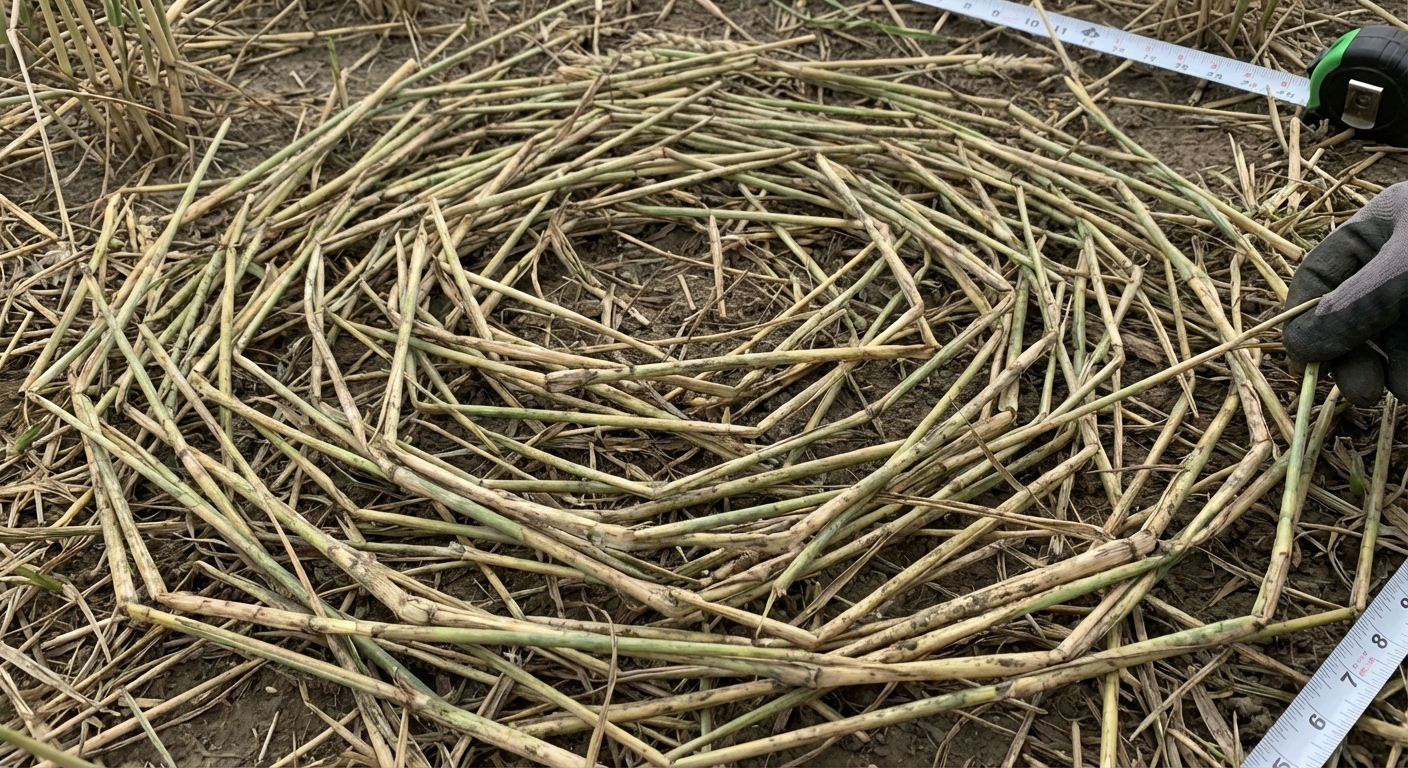
1) Laboratory-reported plant/soil anomalies: some researchers, most prominently William C. Levengood and collaborators, published papers claiming unusual plant anatomy (node elongation, expulsion cavities) and soil/iron particle anomalies in samples taken from certain formations. These findings were published in venues sympathetic to anomalistics and in at least one mainstream plant physiology outlet, and they are often cited by proponents as indicators that something other than mechanical flattening occurred in some formations. However, the methods, chain-of-custody for samples, and repeatability of results have been heavily debated. Supportive reports exist, but independent, widely replicable confirmations in mainstream journals are limited.
2) Witness reports of lights or rapid formation: sporadic eyewitness reports describe lights, brief appearance, or rapid emergence of patterns. While these accounts are part of the historical record, they are anecdotal, often collected after the fact, and in many cases have later been shown to be mistaken, misreported, or associated with human activity. Anecdotes alone do not establish an exceptional physical cause.
What is contradicted or unsupported
1) Broad extraterrestrial or deliberate non-human messaging claims: the most expansive claims — that crop circles are deliberate messages from extraterrestrials, advanced non-human intelligences, or secret government craft leaving unambiguous communication — lack reliable, independently verified evidence. Complex geometry alone is not evidence of non-human agency when human makers have demonstrated the craft and intention to create intricate designs. The balance of documented admissions, hoaxes, and replicable human techniques directly contradicts any strong inference that the phenomenon as a whole requires extraterrestrial agency.
2) Definitive biophysical mechanism tied to unknown energies: while some researchers have proposed plasma-vortex or electromagnetic mechanisms to explain plant and soil anomalies, these theories remain contested and have not achieved broad scientific acceptance. Critical reviews point to methodological shortcomings, poor controls, and reliance on contested datasets; where stronger peer-reviewed replication exists it is limited and disputed. In short, extraordinary causal claims about unknown energies are unsupported at the level needed to overturn the simpler human-made explanation for most documented formations.
Evidence score (and what it means)
Evidence score is not probability:
The score reflects how strong the documentation is, not how likely the claim is to be true.
- Evidence score: 45 / 100. This score reflects moderate documentation that many formations are human-made, plus a small body of disputed lab-style findings that have not been robustly and widely replicated in mainstream science.
- Drivers raising the score: first-person admissions by known circle-makers; live demonstrations; investigative exposures of hoaxes; several published studies claiming measurable plant/soil differences.
- Drivers lowering the score: methodological critiques of anomalous-lab work; limited independent replication in mainstream journals; abundance of anecdote and selective sampling in supportive literature.
- Conflict and ambiguity: some researchers report anomalies that, if validated and independently replicated, would raise the score; but those reports remain contested and sometimes come from outlets with limited mainstream peer review. Where sources conflict, the documentation is explicitly mixed rather than convergent.
- What the number does not mean: it is not a probability that any given crop circle is non-human. It measures the quality and convergence of published, documented evidence on the claim that some crop circles are unexplained by human action.
This article is for informational and analytical purposes and does not constitute legal, medical, investment, or purchasing advice.
Practical takeaway: how to read future claims
- Check for direct admissions or footage of makers: when people show how they did a formation and have verifiable records, the human explanation is established. Follow the chain of evidence (time-stamped photos, multiple independent eyewitnesses, documented tools).
- Scrutinize sample handling and peer review: plant/soil anomaly claims require documented chain-of-custody, blind controls, and independent replication published in mainstream journals before being treated as strong evidence. Many anomaly claims have not met these standards.
- Separate surprising patterns from surprising causes: geometric complexity is insufficient to infer exotic causation when skilled humans can and do create complex work. Demonstrated technique and motive (art, hoax, publicity) are common.
- Watch for confirmation bias: researchers and journalists who want a particular explanation sometimes give extra attention to ambiguous features while overlooking simpler explanations or evidence of human activity. Balanced evaluation weighs competing hypotheses against the full dataset.
FAQ
What is the verdict on crop circles — are they hoaxes?
The evidence shows that a large proportion of crop circles are human-made and that public admissions and demonstrations have explained many high-profile cases. However, a minority of claims about plant/soil anomalies remain disputed; they are not, as of now, robustly confirmed at scale in mainstream science. Readers should treat the broader claim that some crop circles are non-human as contested and not established.
Who were the main people who admitted making many crop circles?
Doug Bower and Dave Chorley publicly described making numerous circles beginning in the late 1970s and went public with a confession in 1991; their story and demonstrations are widely cited in reporting on the phenomenon. Subsequent circle-makers and demonstrators have shown that complex patterns can be produced by human teams.
Do any peer-reviewed scientific studies support non-human causes?
There are published papers reporting plant and soil anomalies associated with some formations (for example work often associated with W. C. Levengood and collaborators), but these findings remain contested. Some appeared in niche or sympathetic journals and have drawn methodological criticisms; independent mainstream confirmations are limited. The scientific community does not have a widely-accepted, reproducible mechanism that requires non-human causation.
How should journalists or researchers approach new crop circle claims?
Demand verifiable documentation (time-stamped imagery, independent witnesses, sample chain-of-custody), seek independent lab replication for any physical anomalies, and consider simpler explanations (human action, weather, farming equipment) before elevating extraordinary causal claims. Transparent methodology and peer review are essential.
Can a single documented plant anomaly prove a non-human origin?
No. A single anomalous result is insufficient: it must be replicated under controlled conditions, show clear statistical significance, and rule out contamination, sample mishandling, or plausible mechanical/chemical explanations. Until such replication occurs in mainstream venues with transparent methods, anomalous reports remain suggestive but not conclusive.

Science explainer who tackles space, engineering, and ‘physics says no’ claims calmly.