
Intro: This article tests the smart meter ‘secret radiation’ claims against the best available counterevidence and expert explanations. It treats the phrase smart meter secret radiation claims as a claim, not a fact, and summarizes measurement studies, regulatory findings, peer-reviewed analyses, and dissenting reports so readers can see where documentation is strong and where uncertainty remains.
The best counterevidence and expert explanations about smart meter ‘secret radiation’ claims
-
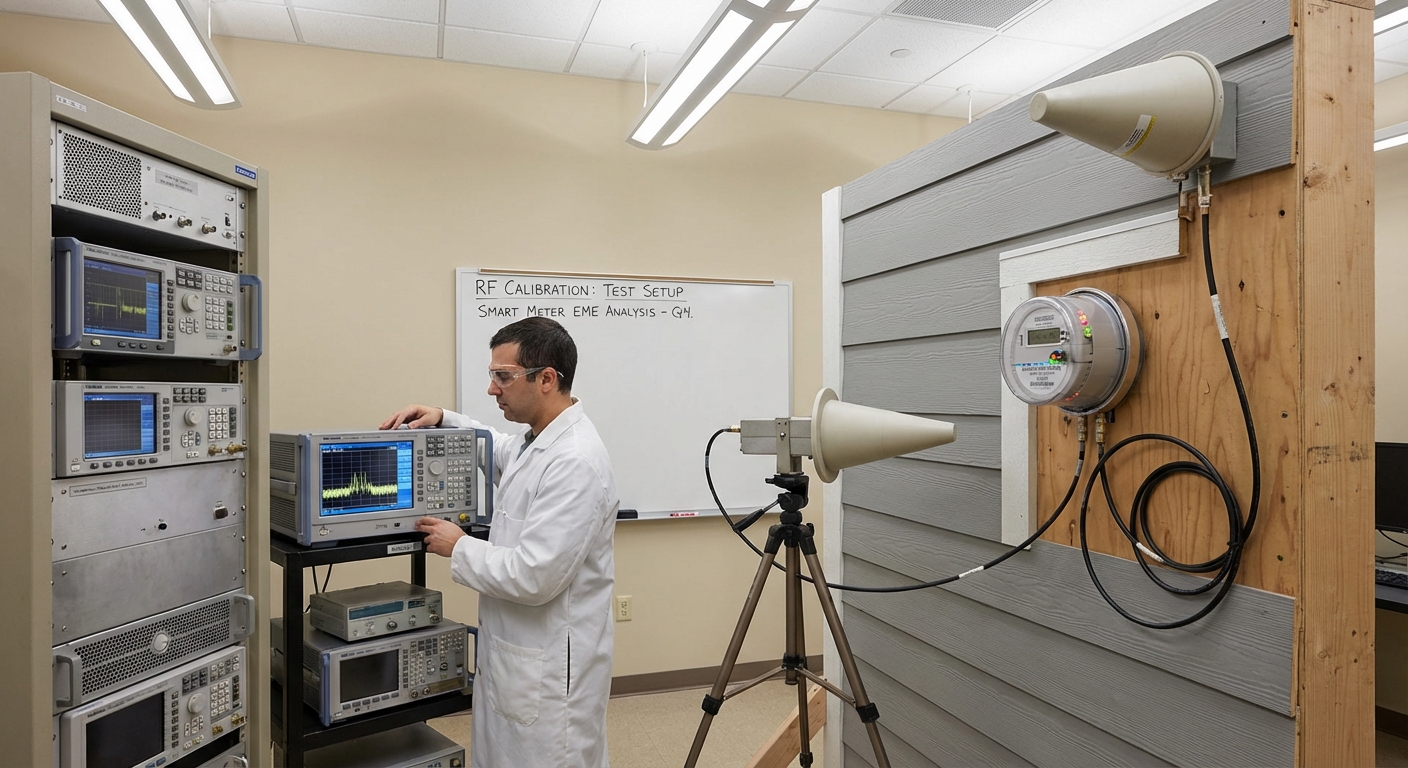
Independent measurement studies show smart meters emit short, low-duty-cycle radiofrequency pulses whose time‑averaged power is typically far below international exposure limits. A measurement study of deployed Itron smart meters reported spatial field distributions and duty cycles (often under 1%), which are crucial to assessing average exposure rather than instantaneous peaks. These time‑averaged exposure levels were small compared with limits used by international bodies.
Why it matters: Peak field strength by itself does not determine health-limiting exposure; regulators use averaging and established limits (e.g., FCC or ICNIRP methods) to assess safety. Measurement studies that include duty cycle and distance therefore provide a more realistic exposure estimate.
Limits: Most published measurement studies evaluate a limited set of meter models, frequencies, and use-case distances. Results for a specific meter or installation can vary, so results are representative but not exhaustive.
-
Regulatory agencies and utility technical fact sheets state deployed smart meters comply with national RF exposure limits and are substantially lower than common personal devices. For example, utility and public information pages cite FCC compliance testing and comparisons showing smart meter emissions are far below the FCC general population exposure limits and lower than or comparable to many household wireless devices.
Why it matters: Compliance testing is an accepted regulatory pathway to assess population-level risk; multiple utilities and independent fact sheets reference those results.
Limits: Compliance with regulation does not prove the absence of any possible effect (especially effects not considered when limits were set). It also depends on correct test methods and representativeness of tested models. Critics argue some test interpretations (e.g., averaging methods) can understate biologically relevant peaks; proponents point to long-standing international guidance.
-
Authoritative reviews of non‑ionizing RF (the category that includes smart‑meter transmissions) conclude that the energy levels are insufficient to cause ionizing damage (DNA breaks) and that observed acute biological effects occur chiefly at much higher exposure intensities. Organizations that synthesize the literature (for example, ICNIRP and national public‑health reviews) place smart‑meter‑level exposures well below levels known to cause tissue heating—the primary established mechanism of harm at RF frequencies.
Why it matters: Distinguishing ionizing from non‑ionizing radiation clarifies that smart meters do not produce X-rays or similar high‑energy radiation. International guidance focuses on demonstrated mechanisms and sets exposure reference levels accordingly.
Limits: Scientific debate continues over low‑level, non‑thermal biological effects. While major reviews find little consistent evidence of harm at smart‑meter‑level exposures, some researchers and advocacy groups highlight studies they interpret as showing subtle biological responses. Those studies are contested and uneven in methods and replication.
-
Comparative exposure context: published comparisons show that close-proximity use of mobile phones produces higher, localized RF exposure than typical smart‑meter exposure measured at realistic distances and averaged over time. Utilities and measurement studies emphasize that proximity (how close a device is to the body) strongly affects personal exposure—cell phones held near the head or body typically produce higher localized specific absorption rates than meters mounted on exterior walls.
Why it matters: Many everyday wireless devices can produce higher or more localized exposures than smart meters; comparisons help place smart‑meter exposures in context for risk assessment.
Limits: Comparing devices is valid only when using consistent metrics (e.g., time‑averaged power, distance, SAR) and recognizing different exposure patterns (continuous low-duty-cycle vs. intermittent high-power close contact). Some critics argue that chronic low-level whole‑home exposure deserves more study even if instantaneous levels are low.
-
Dissenting and precautionary literature documents concerns, anomalous measurements, and reported symptoms that supporters cite as evidence of harm. Sources range from activist reports and non‑peer‑reviewed compilations to selective literature reviews (for example, BioInitiative, electrosmog advocacy sites, and compilations of self‑reported symptoms). These sources often call for more research and for applying the precautionary principle.
Why it matters: Even when mainstream measurement and regulatory work find low exposures, the presence of dissenting studies and citizen reports indicates areas where research questions remain or where people perceive real harms. Responsible analysis must show these sources and explain their methodological critiques.
Limits: Many dissenting reports rely on heterogeneous evidence, anecdote, or studies that other experts judge methodologically weak or not replicated. That does not nullify all concerns, but it reduces the strength of those items as proof that smart meters are causing harm.
Alternative explanations that fit the facts
-
Perceptual and nocebo effects: symptom reports following new installations can be associated with stress, expectation, or increased attention to sensations rather than a direct physiological effect of RF. Double‑blind provocation studies in other RF contexts have found that when subjects do not know whether a device is active, symptom reporting often does not correlate with actual exposure. This does not dismiss individual suffering but is a plausible non‑RF explanation for clusters of symptom reports.
-
Measurement error and misinterpretation: consumer RF meters, phone apps, and videos sometimes measure instantaneous peaks, conflate units, or fail to account for duty cycle and averaging, producing alarming but misleading comparisons. Experts emphasize professional, calibrated measurements and standardized metrics for accurate exposure assessment.
-
Other environmental sources: elevated ambient electromagnetic noise or different household devices (Wi‑Fi routers, cordless phones, baby monitors, multiple meters) can contribute to complex RF environments. When multiple sources are present, isolating a single causal device without controlled measurement is difficult.
What would change the assessment
-
Robust, replicated, peer‑reviewed epidemiology that demonstrates a dose–response relationship specific to smart‑meter–level exposures and relevant health outcomes would materially strengthen the claim. To be persuasive, such studies would need careful exposure assessment, large samples, control for confounders, and replication. Currently, the literature lacks that level of evidence specific to smart meters.
-
Independent, large‑scale measurement surveys across many meter models and housing scenarios showing higher-than‑reported time‑averaged exposures (with validated methods) would also alter risk assessment. Conversely, comprehensive measurement programs confirming consistently low time‑averaged exposures across diverse real‑world settings would reduce the plausibility of the claim.
-
Mechanistic laboratory findings that reliably link low‑level, non‑thermal RF exposures at smart‑meter intensities to specific adverse biological outcomes, replicated across labs, would change how guidance is set. At present, recognized mechanisms at these exposure levels are not established.
Evidence score (and what it means)
- Evidence score: 35 / 100
- Score drivers:
- 1) Direct measurement studies and regulatory compliance testing provide consistent, reproducible evidence that typical time‑averaged smart‑meter RF exposures are well below international limits.
- 2) Major international bodies and national reviews classify these exposures as non‑ionizing and below levels linked to established thermal effects.
- 3) Presence of dissenting compilations, selective studies, and self‑reported symptom clusters increases uncertainty and points to research gaps—especially about chronic low‑level exposure and vulnerable subpopulations.
- 4) Lack of large, replicated epidemiology directly linking smart‑meter‑level exposures to health outcomes keeps overall documentation limited.
- 5) Measurement heterogeneity (different meter models, frequencies, network topologies) reduces the generalizability of some studies.
Evidence score is not probability:
The score reflects how strong the documentation is, not how likely the claim is to be true.
This article is for informational and analytical purposes and does not constitute legal, medical, investment, or purchasing advice.
FAQ
Q: Do smart meters emit a dangerous type of radiation?
A: The phrase smart meter secret radiation describes a claim. Available measurement studies and regulatory assessments show smart meters emit RF non‑ionizing radiation at short duty cycles and time‑averaged levels typically far below international exposure limits; authoritative bodies classify this as non‑ionizing energy not capable of causing ionizing damage at those power levels. However, dissenting reports and activist compilations argue for different interpretations, and those disagreements drive uncertainty.
Q: How do smart meter exposures compare to cell phones?
A: When a cell phone is held against the head or body during a call, localized exposure can be substantially higher than the average exposure from a smart meter mounted on an exterior wall. Measurement studies used by utilities and independent groups consistently show that, after accounting for duty cycle and distance, smart‑meter time‑averaged exposures are typically lower than close‑contact cell‑phone exposure. That does not remove all uncertainty about long‑term low‑level exposures, but it provides context for comparative exposure.
Q: What should someone concerned about smart meter ‘secret radiation’ claims do?
A: If you are concerned, request calibrated, professional RF measurements for your specific installation; consider physical distancing where practical (meters are typically on exterior walls); and review reputable regulatory and public‑health summaries. On-site measurement is the only way to resolve questions for a specific meter model and installation. Critics also suggest opt‑out and mitigation pathways where local regulations permit, but those choices involve tradeoffs (e.g., reading methods, fees).
Q: Why do some groups say smart meters are dangerous despite official findings?
A: Dissent arises from several sources: selective citation of studies interpreted as supporting non‑thermal biological effects, anecdotal symptom reports, disagreement over averaging and measurement methodologies, and application of precautionary principles. Some advocacy groups compile studies they view as evidence, but these compilations often include heterogeneous methods and sources that mainstream reviewers judge insufficiently replicated or inconsistent. The resulting conflict is methodological as much as substantive.
Q: Are there documented cases of smart meters interfering with medical devices?
A: Some utility or research reports have tested interference with implanted cardiac devices and pacemakers under specific conditions; such studies are limited and focus on device compatibility, not population health outcomes. Where interference has been studied, results depend on device models, placement, and exposure scenarios—so documented testing is narrow and not general proof of widespread interference.

Tech & privacy writer: surveillance facts, data brokers, and what’s documented vs assumed.