
Intro — scope and purpose: This timeline examines the claim framed as “How to Verify Viral Screenshots.” It tracks when verification tools, standards, controversies, and formal guidance appeared, cites the primary documents and tool pages that shaped practice, and flags where the record is contested or technically limited. The goal is to show what is documented, what remains disputed, and what cannot be proven from public sources. The phrase “How to Verify Viral Screenshots” is used throughout as the organizing claim under review.
Timeline: How to Verify Viral Screenshots — key dates and turning points
- 2008 — The launch of large-scale reverse image search services opened systematic origin-tracing for images. TinEye’s service, launched in 2008, became a foundation for later image-origin checks and motivated development of other reverse-search options used when verifying screenshots.
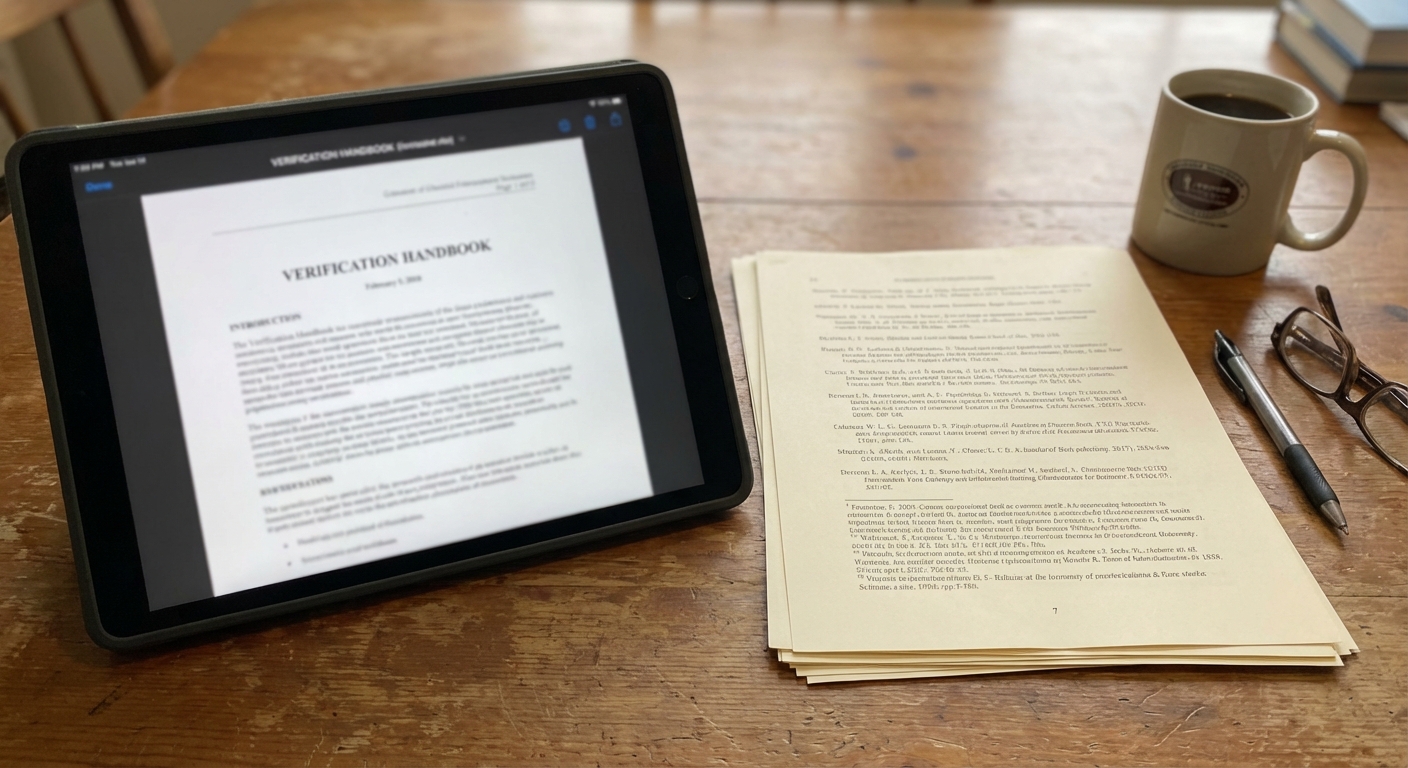
- 2011–2014 — Journalistic verification practices codified: newsrooms and civil-society groups began publishing step-by-step verification guidance for UGC (user-generated content). The Verification Handbook and related projects collected best practices for checking images, videos, and social posts; these resources emphasized cross-checking, reverse-image search, metadata inspection, and caution about screenshots as standalone proof. Multiple editions and related toolkits were published in this period.
- 2013 — High-profile photo-forensics controversies highlighted the limits of simple forensic tests. The World Press Photo debate and independent analyses (including discussions of Error Level Analysis and metadata interpretation) showed that tools like ELA can be misread and that expert interpretation is required; this episode raised caution about over-reliance on a single forensic indicator when evaluating images or screenshots.
- 2016–2017 — Integrated verification toolkits appeared for journalists and investigators. The InVID/WeVerify project produced a plugin that bundled magnification, metadata extraction, forensic filters, and reverse-image search integrations — making multi-step screenshot checking more routine in newsrooms. This project and AFP/Medialab work formalized practical workflows journalists use to inspect alleged screenshots.
- 2017–2020 — Web services and commercial solutions for trustworthy capture and authentication emerged. Companies such as Truepic promoted “trusted capture” workflows that record capture-time information and analyze images for manipulation; these services addressed a core limitation of ordinary screenshots (lack of cryptographic provenance) but require controlled capture or platform cooperation.
- 2020–2023 — Academic advances in image-manipulation detection (deep-learning forensic models) improved detection of certain forgeries, but also produced contested results about false positives and generalizability. New research frameworks (for example TruFor and related papers) stressed combining multiple low-level and high-level clues rather than relying on single tests. These technical advances showed progress but also emphasized limits on automated certainty.
- 2020s — Platform policies and metadata stripping: social platforms and many apps routinely strip some embedded metadata on upload, and screenshots themselves often lack original camera EXIF; that reality shifted verification practice toward cross-referencing web archiving, reverse searches, and platform records rather than relying on embedded metadata alone. Verification guides and newsroom toolkits reflect this shift.
- Ongoing — The rise of generative AI and synthetic media made screenshot-origin questions more complex: image-similarity searches, forensic filters, and provenance systems continue to evolve, but no single public method now gives definitive proof that a viral screenshot is authentic without corroborating records or platform data. Recent tool and standards development (including commercial “trusted capture” and research on combined forensic signals) are the current turning points.
Where the timeline gets disputed
Several points on the timeline are not settled or are reported differently by reputable sources:
- Publication dates and first editions for verification guides: some pages and citings list different first-publication years for the Verification Handbook and its editions; the Handbook has multiple editions and companion volumes, and different project pages record different release notes. The difference reflects successive editions and updates rather than a contradiction about its practical role, but the precise “first published” date varies by source.
- The reliability of single forensic tests (ELA, simple metadata checks): experts disagree about how reliable isolated tests are. Public controversies (for example around photo-forensics) show that ELA and surface forensic indicators can be misinterpreted if used alone; some practitioners still use ELA as a heuristic, others warn it should not be relied on without additional evidence. These disagreements are documented in technical commentary and journalistic analysis.
- How often screenshots contain useful metadata: many platform pages and forensic guides state that platform uploads strip metadata and that screenshots frequently lack original camera EXIF; however, the exact behavior can vary by OS, browser, or third-party tool. Authors and tool vendors therefore recommend confirming metadata behavior on the specific device and workflow used.
Evidence score (and what it means)
- Evidence score: 58
- Drivers of the score:
- Documented, peer-reviewed research on image-forgery detection exists and shows genuine technical progress (supports verification techniques).
- Recognized newsroom toolkits and plugins (InVID, Verification Handbook) provide repeated, public operational guidance used by major media organizations.
- Commercial provenance/capture services (Truepic and others) document techniques to create verifiable capture chains, but they are gated (require cooperation or controlled capture) and are not universally used.
- High-profile controversies (World Press Photo, debates about ELA) show that single-test approaches have misled non-experts; expert interpretation is necessary.
- Practical limits: screenshots often lack embedded provenance and platforms routinely alter metadata, constraining what can be proven from a standalone viral screenshot.
Evidence score is not probability:
The score reflects how strong the documentation is, not how likely the claim is to be true.
This article is for informational and analytical purposes and does not constitute legal, medical, investment, or purchasing advice.
FAQ
Q: Can I reliably verify a viral screenshot on my own using publicly available tools?
A: You can often gather strong corroborating signals (reverse-image search, adjacent posts, archived pages, and visible timestamps/URLs) but a standalone screenshot rarely provides cryptographic proof of origin. Tools like reverse-image search, InVID magnifier, metadata extractors, and forensic filters are useful for building a picture, but each has limits and must be combined. For tool overviews and recommended workflows see the Verification Handbook and the InVID toolkit.
Q: What are the best first-step tests to check a screenshot?
A: Best-practice first steps documented by newsroom toolkits include: (1) reverse-image search to find earlier appearances, (2) capture of the posting context and URL (if applicable), (3) checking platform timestamps and archived copies, (4) inspecting visible UI elements for inconsistencies, and (5) extracting any metadata that remains. Do not rely on a single forensic filter.
Q: Why do experts warn about Error Level Analysis and similar single tests?
A: ELA and similar visual-forensic tests can indicate differences in recompression patterns but are sensitive to platform re-encodings, saving history, and image format changes; they can produce false positives on routine edits and false negatives on careful forgeries. Experts advise ELA only as part of a wider investigation and note notable controversies where ELA was misread.
Q: Does reverse-image search always find the original source of a screenshot?
A: No. Reverse-image search is powerful but depends on the image being indexed somewhere. Services differ in coverage (Google, Yandex, TinEye, and dedicated archives each index different parts of the web). If the image or its near-duplicates are not indexed, a reverse search may return no provenance. Combine reverse search with web-archiving, account timeline checks, and platform record requests.
Q: How does the rise of AI-generated images change verification of screenshots?
A: AI-generated and AI-edited images make visual inspection alone less reliable. Recent research emphasizes fusion of multiple forensic signals and provenance standards; commercial “trusted capture” systems try to create signed capture records. Publicly available forensic models help, but they are not definitive without corroborating platform or capture-chain evidence.
Q: How should I treat a viral screenshot as evidence in reporting or legal contexts?
A: Treat screenshots as leads, not conclusive proof. Preserve context (original URL, account, and timestamps), collect archival copies, obtain platform records when possible, and document your verification steps. For legal proceedings, cryptographically captured evidence or platform logs are generally stronger than a standalone screenshot. Tools and guides from experienced verification teams explain these workflows.

Beginner-guide writer who builds the site’s toolkit: how to fact-check, spot scams, and read sources.