
This article tests the HAARP weather control claims against the strongest counterevidence and expert explanations available in public records and peer-reviewed reporting. We treat the idea that HAARP can create, steer, or intentionally modify weather as a claim to be evaluated: the facility’s stated mission, technical limits, and independent fact-checks are examined to separate documented facts from speculation. HAARP weather control claims is the primary phrase this analysis uses to align the subject and sources.
HAARP weather control claims: scientific context
The High-Frequency Active Auroral Research Program is an ionospheric research facility in Gakona, Alaska, that uses an array of high-frequency transmitters to temporarily heat small volumes of the ionosphere for study. The facility’s operator and public materials state the purpose is basic research into ionospheric processes and how they affect radio propagation and space weather, not weather modification in the troposphere where everyday weather occurs.
The best counterevidence and expert explanations
-
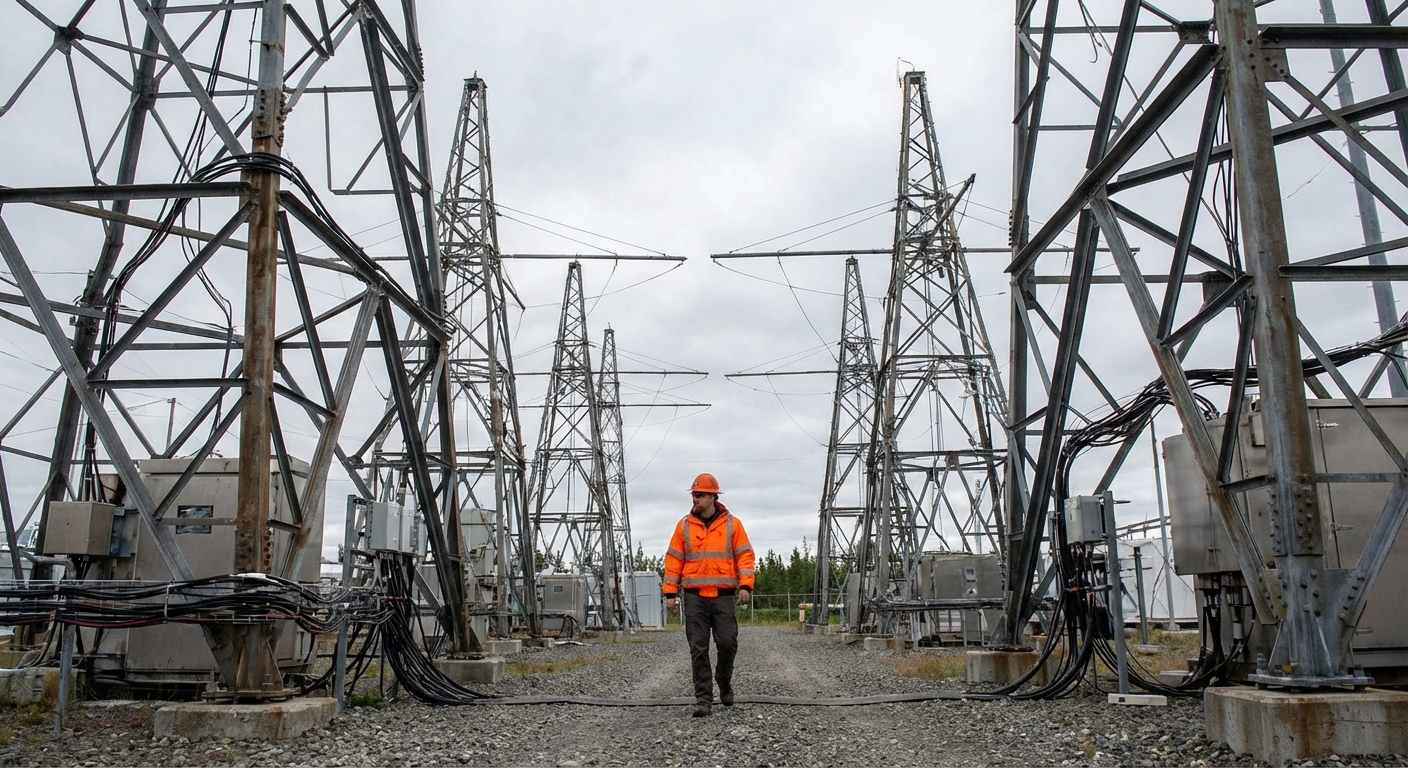
Official mission, instrumentation, and altitudes: HAARP’s publicly documented instrument is the Ionospheric Research Instrument, a phased array of HF antennas capable of radiating up to ~3.6 MW into the ionosphere. The experiments intentionally target layers of the ionosphere tens to hundreds of kilometers above the Earth’s surface — far above the troposphere (which ends at roughly 8–18 km depending on latitude), where clouds and weather systems form. This separation of altitude is a core technical limit cited by HAARP staff and independent explainers.
-
Orders-of-magnitude energy difference: Multiple independent descriptions and analyses note that the HF energy HAARP deposits into the ionosphere is extremely small compared with natural inputs (for example, solar UV and particle precipitation). Scientists emphasize that HAARP’s directed power at ionospheric altitudes is orders of magnitude lower than natural drivers of the upper atmosphere, and any perturbation dissipates largely locally and quickly. This energy accounting undermines claims that HAARP can deliver the kind of large-scale forcing required to change tropospheric weather patterns.
-
Authoritative federal fact-checks and atmospheric science consensus: NOAA and other U.S. agencies and independent fact-checkers have explicitly stated that no existing technology—including HAARP—can create, steer, strengthen, or otherwise control hurricanes or large weather systems. NOAA’s climate fact-checks and reviewers of recent viral claims conclude HAARP lacks the mechanisms and energy coupling to affect weather in the lower atmosphere. These institutional statements are a major counterevidence pillar.
-
Peer-reviewed and technical literature on ionospheric heating: Scientific papers and conference abstracts describe HAARP’s capabilities for producing localized ionospheric effects (e.g., artificial airglow, short-lived plasma irregularities, and the generation of certain low-frequency waves). These documented results are consistent with controlled, small-scale upper-atmosphere experiments rather than weather modification at tropospheric scales. Researchers note the ability to study plasma physics, communications impacts, and magnetospheric coupling, but not to force large-scale meteorological change.
-
Historical fact-checks of viral origin stories and leaked-document claims: Several investigations have traced widely-circulated claims (for example, satire misattributed to whistleblowers or misreadings of Air Force research reports) back to satire, misunderstandings, or selective reading of military research documents. Fact-checking organizations have repeatedly concluded that key viral claims lack verifiable evidence. This undermines the evidentiary chain often presented by proponents.
-
Documented military interest vs. documented capabilities: Unclassified military technical reports and reviews (notably summarized in reporting from outlets such as Wired) discuss potential military research applications of ionospheric heating (communications, surveillance, and certain propagation effects). These discussions do not equate to demonstrated weather-control capability; they describe plausible research goals and hypothetical applications, some of which remain speculative and would still require mechanisms far outside HAARP’s documented operational envelope to influence tropospheric weather. Users who cite these reports often conflate proposed research aims with proven operational effects.
Alternative explanations that fit the facts
Several alternative explanations account for why HAARP became linked to weather-control theories without any documented mechanism: (1) misinterpretation of technical military reports that mention possible applications for communications or remote sensing; (2) the remote and secretive origin of the project (military funding and limited early public access); (3) confusion between weather modification practices that actually exist (e.g., cloud seeding, which operates in the troposphere) and ionospheric research; and (4) viral satire or disinformation pieces that were later shared as fact. Each of these explanations fits the documented evidence and reduces the need to posit a new, undocumented mechanism by which HAARP changes weather.
What would change the assessment
-
Direct, verifiable technical evidence that HAARP (or a comparable ionospheric heater) measurably and reproducibly altered tropospheric thermodynamic or kinematic fields at weather-relevant scales (e.g., records showing a causal chain with repeatable experiments). This would need to be published in peer-reviewed atmospheric science journals, include independent replication, and show energy budgets consistent with the claimed effect.
-
Government or institutional documentation showing operational programs that intentionally used HAARP-like transmitters to conduct weather-modification campaigns, including recorded experimental protocols, pre- and post-experiment atmospheric observations, and audit trails. Redacted or anecdotal documents would be insufficient without verifiable measurements and independent confirmation.
-
Independent measurements demonstrating energy transfer mechanisms from ionospheric perturbations down to tropospheric processes (for example, a peer-reviewed chain of physics showing how a specific ionospheric heating pattern leads to tropospheric convection changes and then meteorological impacts). As of now, such a mechanism is not documented in the literature cited by mainstream atmospheric scientists.
Evidence score (and what it means)
-
Evidence score: 12 / 100
-
Drivers: strong primary documentation of HAARP’s stated mission and instrumentation; authoritative federal and scientific fact-checks denying weather-control capability; published ionospheric research showing only localized upper-atmosphere effects; lack of peer-reviewed, reproducible experiments demonstrating tropospheric impact; prevalence of satire and misattributed documents feeding the claim.
-
Limits: some unclassified military reports discuss potential applications that are sometimes misread; hypothetical mechanisms are occasionally described in non-peer-reviewed sources, producing confusion.
-
Consensus weight: multiple independent fact-checks and atmospheric science experts align against the claim.
Evidence score is not probability:
The score reflects how strong the documentation is, not how likely the claim is to be true.
This article is for informational and analytical purposes and does not constitute legal, medical, investment, or purchasing advice.
FAQ
Q: Can HAARP actually control or steer hurricanes or large storms?
A: There is no documented mechanism or verified experiment showing that HAARP can create, steer, or control hurricanes or large weather systems. NOAA and other science communicators have explicitly stated that no current technology, including HAARP, can steer hurricanes; weather systems are governed by large-scale oceanic and atmospheric dynamics in the troposphere, far below HAARP’s operational altitude.
Q: If HAARP can’t control weather, what can it do?
A: HAARP’s documented experiments produce small, localized ionospheric effects useful for studying plasma processes, radio-wave propagation, and how the upper atmosphere responds to controlled inputs. Published results include artificial airglow, short-lived ionospheric layers, and generation of low-frequency waves for research into communications and magnetospheric coupling. These are upper-atmosphere phenomena, not tropospheric weather control.
Q: Why do credible military reports sometimes get cited to support the HAARP weather control claims?
A: Some unclassified Air Force and Navy documents discuss potential applications for ionospheric heating (communications, sensing, and theoretical military uses); when those documents are separated from context or described in non-technical summaries, readers can conflate hypothetical or exploratory research aims with demonstrated operational capabilities. Wired and other outlets have reported on how military interest and technical descriptions contributed to public concern, but the reporting shows discussion of possible applications rather than proof of weather-control operations.
Q: What is the best short explanation for why HAARP weather control claims spread?
A: A mix of factors: early secrecy and military association, misread or sensationalized technical reports, the existence of legitimate weather-modification activities (like cloud seeding) that operate in a different part of the atmosphere, and viral satire or misinformation that gets recirculated as fact. These social and communicative dynamics amplify weak or speculative connections into strong-sounding claims.
Q: Where can I find authoritative, primary documentation about HAARP’s capabilities?
A: Start with the HAARP program pages maintained by the University of Alaska Fairbanks and the facility FAQ, authoritative encyclopedia summaries like Britannica, and peer-reviewed ionospheric research indexed through academic databases. For government positions about weather modification generally, NOAA’s weather modification reporting and fact-check pages provide official context.

Science explainer who tackles space, engineering, and ‘physics says no’ claims calmly.