
Scope and purpose: this timeline surveys the origins and development of the Titanic ‘Ship Swap’ claims and the documentary and physical evidence that supporters and critics cite. The text treats the swap as a claim under examination and summarizes primary inquiries, shipyard and voyage records, modern wreck surveys, and recent media circulation. The phrase “Titanic ship swap claims timeline” is used below to guide the scope of dates and documents reviewed.
Titanic ship swap claims timeline: key dates and turning points
-
20 September 1911 — Collision: RMS Olympic collides with Royal Navy cruiser HMS Hawke in the Solent; Olympic sustains hull damage and returns for repairs. This incident is the historical event that later authors cite as the financial and operational motive for a supposed «swap.» (contemporary reports, ship logs, and later ship histories).
-
October–November 1911 — Repairs and yard work: Olympic is moved to Harland & Wolff in Belfast for permanent repairs; Harland & Wolff reassignments briefly delayed Titanic’s fit‑out. Repair records and period press reports show Olympic returned to service by November 1911. Supporters of the swap theory point to these movements as an opportunity for disguise; most professional historians treat them as routine repair operations.
-
24 February 1912 — Olympic propeller trouble and additional work: Olympic required another repair that temporarily drew yard resources; historians cite these delays as part of the documented sequence that affected scheduling at Harland & Wolff. This is often referenced in narratives that attempt to explain timing pressure on the White Star Line.
-
10 April 1912 — Titanic departs Southampton on her maiden voyage. Shipping manifests, port logs, and contemporary press identify Titanic as the vessel leaving that day. The existence of consistent voyage records is a key counterpoint to swap claims.
-
14–15 April 1912 — Collision and sinking: Titanic strikes an iceberg late on 14 April and sinks in the early hours of 15 April 1912. Rescue, survivor testimony and subsequent official inquiries were recorded immediately after the disaster. These contemporary records are central primary sources for what happened to the ship that left Southampton on 10 April 1912.
-
April–July 1912 — Official inquiries: United States Senate hearings (April–May 1912) and the British Wreck Commissioner’s Inquiry (May–July 1912, report published 30 July 1912) collected testimony from survivors, officers, White Star executives and experts. The transcripts and final reports examined ship construction, navigation, communications, and events on the night of the loss. These primary records are repeatedly cited by historians and fact‑checkers as foundational documentation that does not mention a premeditated ship identity swap.
-
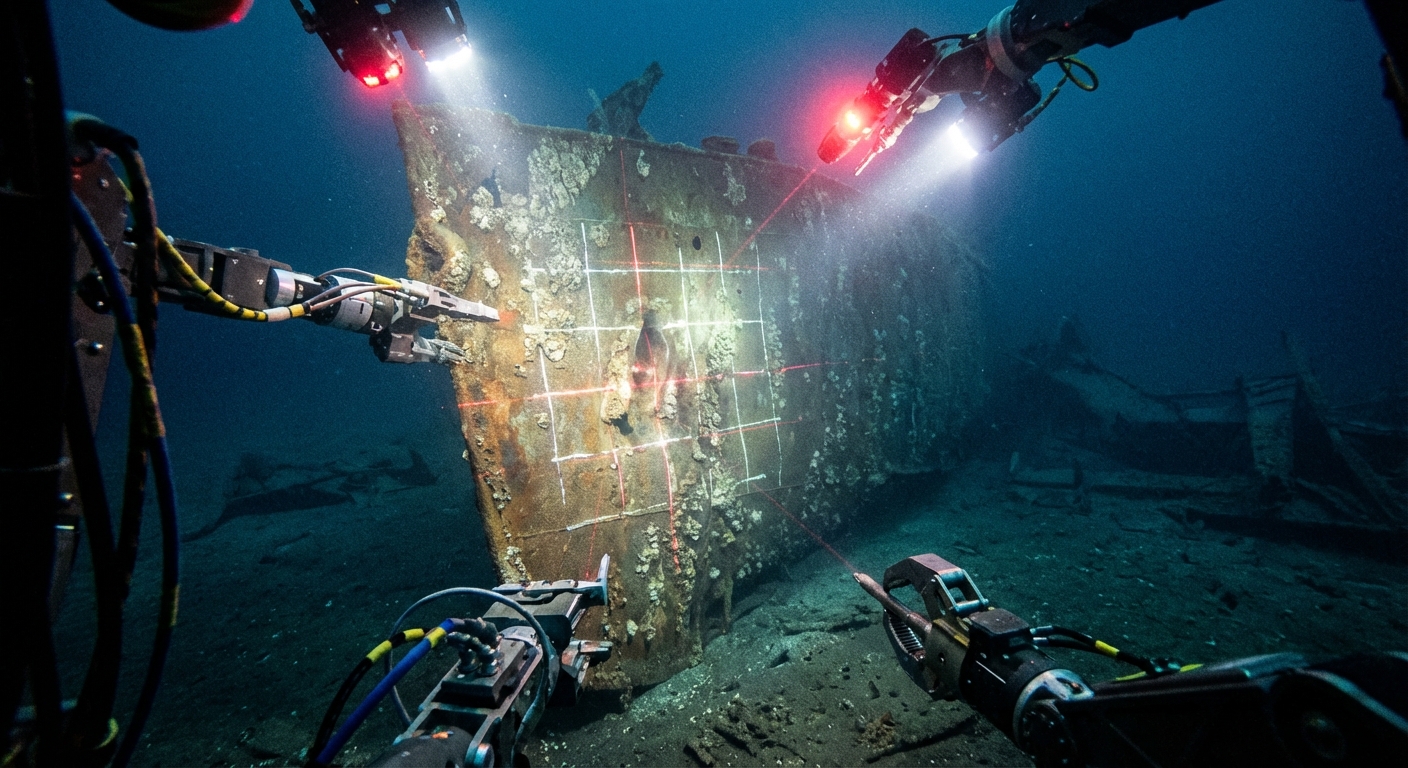
1 September 1985 — Wreck discovery: an American–French expedition led by Jean‑Louis Michel and Dr. Robert D. Ballard located and visually documented the wreck of the ship widely accepted as Titanic. Video and physical surveys in the 1980s onward produced the first modern, direct observations of the wreck site. Those survey data form a forensic record used to compare hull, machinery and part details to shipyard documentation.
-
1996 — Modern swap theory published: Robin Gardiner published an extended version of the swap hypothesis (later popularized in the 1990s and 2000s); Gardiner’s work assembled circumstantial items (yard scheduling, repairs, visual differences in photographs) into a coherent claim that Titanic and Olympic had been switched. Gardiner’s book is the main modern origin cited by current proponents.
-
2010s–2020s — Ongoing scholarship and public scrutiny: historians, maritime engineers and Titanic researchers responded to Gardiner and similar claims with detailed rebuttals citing shipyard records, the number and placement of fittings, legal and insurance records, and contemporaneous voyage logs. Scholarly and enthusiast analyses point to many structural and operational differences between the vessels and emphasize the logistical impracticalities of a full swap.
-
May 2023 — Full‑scale 3D scan/digital twin: deep‑sea mapping teams (Magellan/Atlantic Productions and partners) produced a comprehensive 3D scan of the wreck and debris field at millimeter resolving power; surveyors reported part/serial numbers visible on propeller blades and other components that match Titanic production records (for example, propeller number 401 assigned to Titanic in yard documentation). Project coverage and expert commentary were widely reported and used by recent fact‑checks to rebut swap assertions that the wreck is Olympic.
-
2023–2025 — Social media resurgence, viral posts, and fact checks: the swap claim resurged on platforms such as TikTok and Threads. Fact‑checking outlets and reputable news organizations reviewed the claim, highlighted documentary and physical counterevidence, and pointed to inconsistencies in the swap narrative (travel logs, part numbers, ship differences). Examples include Lead Stories, Politifact, Snopes and mainstream outlets summarizing expert rebuttals. These fact checks confirm the claim’s modern provenance and summarize why many experts reject it.
Where the timeline gets disputed
The dispute centers on two linked questions:
-
Did White Star Line (or its owners) deliberately swap identities between Olympic and Titanic before 10 April 1912? Supporters point to the Olympic–Hawke collision, yard activity, perceived photographic inconsistencies (e.g., porthole counts and promenade enclosures), and the potential financial motive of repair costs and insurance arrangements. The modern incarnation of the claim was systematized by Robin Gardiner and later amplified on social media.
-
How should physical and documentary evidence from shipyard records, voyage manifests, contemporary press, official inquiries and the wreck itself be weighed? Critics and most maritime historians identify multiple lines of documentary and physical evidence that conflict with a swap: (1) voyage and port logs place Olympic and Titanic in different locations at critical times; (2) the British and U.S. inquiries collected detailed testimony and technical reports that make no mention of a deliberate identity swap; (3) modern wreck surveys show part numbers and hull/engine features matching Titanic records; and (4) changes alleged by swap proponents (for example, simple repainting of large engraved nameplates) are technically and legally implausible without a lengthy, highly visible operation.
-
Where evidence conflicts, it tends to be between selective photographic comparisons and later reconstructions versus converging lines of primary documentation (yard records, legal filings, inquiry transcripts) and modern physical survey data. In other words, the most significant disputes are disagreements about how to interpret photographic or surface visual differences versus how to weigh contemporaneous administrative and forensic evidence. When sources conflict, historians rely on contemporaneous, independently verifiable records and convergent forensic data.
Evidence score (and what it means)
- Evidence score: 18/100.
- Drivers of the score:
- • Primary documentary records (voyage logs, port manifests, Board of Trade and U.S. Senate/Board transcripts) strongly document the identity and movements of both ships and contain no contemporaneous claim of an intentional swap. These sources reduce plausibility for the claim.
- • Modern physical forensics (1985 discovery + post‑1985 surveys, and the 2022–2023 millimeter 3D scan) provide material identifiers (serial/part numbers, machinery layout) that align with Titanic production records and are hard to reconcile with a wholesale identity swap.
- • The swap hypothesis relies heavily on circumstantial inferences, selective photographic comparisons, and a reconstruction published decades after the events (Robin Gardiner’s work), rather than on contemporaneous documentary proof of a swap or on legal/insurance records indicating fraud.
- • Recent fact‑checks and technical rebuttals by maritime historians and researchers present multiple practical, legal and documentary problems with the swap narrative (e.g., the sheer scale and visibility of work required to disguise two ocean‑going liners, the engraving/ship‑name methods used at the time, and yard and crew records).
Evidence score is not probability:
The score reflects how strong the documentation is, not how likely the claim is to be true.
This article is for informational and analytical purposes and does not constitute legal, medical, investment, or purchasing advice.
FAQ
Q: What is the strongest single document that contradicts the Titanic ‘ship swap’ claim?
A: The strongest contradictions come from converging contemporaneous sources: voyage manifests and port logs that place Olympic and Titanic in different places around April 1912, and the detailed transcripts and exhibits from the U.S. Senate and British Board of Trade inquiries (April–July 1912), which examined ship construction, repairs, and movements and contain no contemporaneous allegation of an identity swap.
Q: Didn’t modern scans show part numbers that identify the wreck as Titanic?
A: Yes. The 2022–2023 deep‑sea mapping and the resulting full‑scale 3D model captured details (including part and serial numbers on propellers and machinery) consistent with Titanic production records; this physical forensic evidence is commonly cited by fact‑checkers and researchers as strong evidence against the swap claim.
Q: Who first proposed the idea that Titanic and Olympic were switched?
A: The modern swap narrative in book form is most closely associated with Robin Gardiner, who collected circumstantial items—yard scheduling, repairs, photographs—and assembled them into a hypothesis of deliberate substitution. Gardiner’s work is the primary published source for the mechanism and motive alleged in later social media posts.
Q: Why do images of portholes and deck differences keep circulating as “proof” of a swap?
A: Photographic comparisons are attractive because they seem immediate, but photographs (especially period shipyard and promotional photos) can show different configurations due to stage of fit‑out, camera angle, lens distortion, and later modifications (e.g., enclosure of a promenade deck). Experts caution that photographic claims must be corroborated by yard documentation, part numbers and independent contemporaneous records. Fact‑checkers note that selective photo comparisons alone are weak evidence.
Q: Is the claim still being discussed on social media and why does it persist?
A: Yes. The claim resurged on platforms like TikTok and Threads around 2023–2024 and was spread by viral short videos. Viral formats amplify selective evidence and often omit the primary documentary and physical records that experts use to rebut the claim. Multiple reputable fact‑checking organizations reviewed the recent circulation and found the swap claim unsupported by the strongest documentary and forensic sources.

Science explainer who tackles space, engineering, and ‘physics says no’ claims calmly.