
This article tests the claim framed as “Crop Circles: Hoax vs Unknown” against the best available counterevidence and expert explanations. It treats the subject as a CLAIM—reviewing documented admissions, peer‑reviewed studies, independent critiques, and reproducible demonstrations—and highlights which parts are documented, which are disputed, and which cannot currently be proven.
The best counterevidence and expert explanations
-
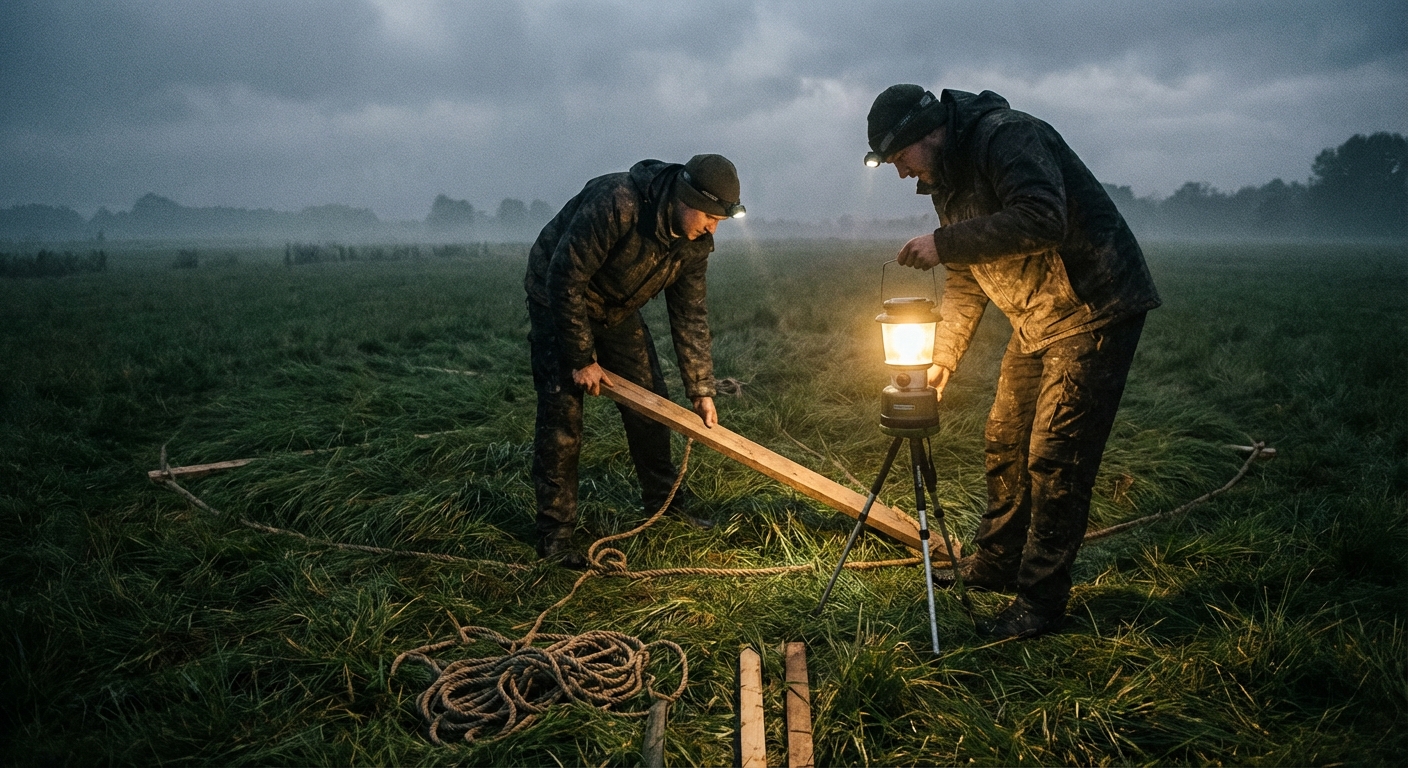
Documented confessions and reproducible demonstration of human methods: two retired men, popularly known as “Doug and Dave,” publicly described making many early modern English crop circles with simple tools (plank, rope, sighting device) and demonstrated their technique to journalists. Their confession and subsequent demonstrations substantially reshaped coverage and scholarly attention to human authorship. This admission is a cornerstone counterevidence point because it shows that at least a major portion of the phenomenon is reproducible by people.
Limits: the confession does not—and the confessors did not claim to—explain every reported formation worldwide nor every complexity reported after 1991; researchers and enthusiasts have continued to debate whether a minority of cases remain unexplained.
-
Demonstrations, competitions and modern circle‑makers: public and private demonstrations, including organized crop‑circle competitions and professional “circlemakers,” have repeatedly shown that very large, complex pictograms can be created at night by teams using boards, ropes, portable rigs and planning tools. These reproducible demonstrations weaken claims that certain geometries are intrinsically beyond human construction.
Limits: a demonstration that a human technique exists does not automatically prove every instance was made that way; each site still requires site‑by‑site evidence to determine origin.
-
Peer‑reviewed plant and soil studies reporting anomalies (and the ensuing critique): a set of laboratory studies led by the BLT Research team reported measurable plant and soil differences in some sampled formations—node elongations, occasional “expulsion cavities,” altered seed germination, and soil particle anomalies—and published some results in peer‑reviewed outlets (Physiologia Plantarum; Journal of Scientific Exploration). These publications are frequently cited by proponents as laboratory‑level evidence of non‑mechanical effects.
Limits and disputes: several independent scientists and letters in the same journals raised concerns about sampling, controls, small sample sizes, and potential confounds (for example, effects of mechanical lodging, nitrogen fertilizer, or post‑flattening growth responses). Responses and commentaries show the BLT results are contested and not universally reproduced; the literature contains both the original BLT publications and subsequent critiques or alternative model proposals. That conflict means the BLT findings cannot, by themselves, establish a non‑human origin.
-
Skeptical investigations and field tests producing human‑made exemplars: investigators associated with skeptical organizations have repeatedly made crop formations that display many of the surface features attributed to mysterious causes and have documented how easily node‑elongation or visual complexity can be produced or mimicked under realistic conditions. Concise skeptical reviews argue that no reliable, reproducible diagnostic can yet distinguish a so‑called “genuine” (non‑human) formation from an elaborately executed human one.
Limits: skeptics acknowledge that some BLT‑style plant anomalies have been reported in sampled formations; the debate is whether these anomalies are unique to non‑mechanical causes or can arise from known post‑flattening biological responses or sampling bias.
-
Geographic and sociological patterns consistent with human activity: analyses of distribution (more frequent near roads, settlements and cultural heritage sites) and correlation with media exposure and tourism suggest social and logistical drivers for where and when formations appear. That pattern supports a hypothesis that many formations are deliberately placed for visibility, effect or commerce.
Limits: distribution patterns are statistical indicators and do not prove intent at a specific site; they complement other site evidence rather than replace it.
Alternative explanations that fit the facts
-
Primary: Elaborate human construction (individuals, teams, artists, or commercial groups) using boards, ropes, ladders, and pre‑planning. This explains reproducible large pictograms, proximity to roads, and many post‑1991 formations created in imitation or competition. Demonstrations and competitions support this.
-
Secondary (natural or environmental processes): simple circular flattening from localized wind vortices or meteorological lodging can create uncomplicated circles; post‑flattening growth responses (phototropism and gravitropism) explain some node elongation and geometric-looking effects in otherwise mechanically flattened plants. Meteorological explanations were proposed before the era of complex pictograms and still explain many simple formations.
-
Hypothesized energetic or electromagnetic mechanisms: some researchers have modeled localized electromagnetic or point‑source heating to account for certain plant and soil anomalies reported in specific samples. These proposals rely on measured anomalies in those samples (BLT and follow‑ups) but remain contested and not widely replicated. If valid, such mechanisms would be an additional, minority hypothesis rather than the mainstream explanation.
What would change the assessment
-
Direct, contemporaneous, verifiable observation of a non‑human process creating a formation (multiple, independent sensors, timestamped video with chain‑of‑custody, and corroborating site samples) would substantially shift the conclusion away from purely human causes. At present, such contemporaneous evidence is absent in the peer‑reviewed record.
-
Independent, blinded replication of the BLT reported plant and soil anomalies using rigorous controls (double‑blind sampling, matched mechanical‑flattening controls, larger sample sizes, and independent labs) would strengthen or weaken the argument for exotic mechanisms depending on the outcomes. Published, replicated null results would reduce confidence in the anomaly‑based claims.
-
Credible admissions or forensic traces linking particular complex formations to documented human makers (planning documents, GPS tracks, tool impressions, witness statements) would resolve specific disputed sites as human projects. Conversely, reproducible chains of evidence excluding human access and contamination in multiple, well‑documented cases would raise the evidentiary bar for alternative explanations.
Evidence score (and what it means)
Evidence score is not probability:
The score reflects how strong the documentation is, not how likely the claim is to be true.
- Evidence score (0–100): 42 — Reflects mixed documentation: strong, reproducible documentation that many crop circles are human‑made (confessions, demonstrations, competitions), plus peer‑reviewed reports of anomalous plant/soil measurements that remain contested and partially unreplicated.
- Drivers raising the score: documented confessions and reproducible human demonstrations; peer‑reviewed BLT publications reporting measurable plant/soil differences.
- Drivers lowering the score: methodological critiques, limited independent replication of anomalous results, and clear social/locational patterns consistent with human activity.
- Key uncertainties: small sample sizes and sampling methodology for the plant/soil anomalies, and the lack of contemporaneous, independently recorded non‑human formation events.
- What would move the score: rigorous, blinded replication of plant/soil anomalies would raise it; robust demonstrations that purportedly anomalous sites were created by human teams would lower it further.
“This article is for informational and analytical purposes and does not constitute legal, medical, investment, or purchasing advice.”
FAQ
Q: Can the phrase “Crop Circles hoax vs unknown” be resolved—are some crop circles proven non‑human?
A: At present, no crop circle has met the standard of independently recorded, contemporaneous evidence that excludes human involvement while also producing repeatable, independently verified laboratory anomalies. The preponderance of evidence documents human creation for many formations (confessions, demonstrations, competitions), while a set of peer‑reviewed studies reported plant/soil anomalies that remain disputed and insufficiently replicated to prove a non‑human origin.
Q: What were “Doug and Dave” and why do they matter?
A: Doug Bower and Dave Chorley publicly admitted in 1991 to creating many early modern crop formations in southern England using simple tools and demonstrated their technique. Their admission is a central piece of counterevidence showing how human actors can and have initiated the modern wave of formations; it does not by itself resolve every reported case worldwide.
Q: Aren’t there peer‑reviewed papers showing plant and soil anomalies?
A: Yes. Researchers such as W. C. Levengood and colleagues published findings in peer‑reviewed journals reporting node elongations, expulsion cavities, altered germination and soil particle anomalies in some sampled formations. However, those findings have been contested on methodological grounds and have not produced a broad, independent consensus that they indicate a non‑human mechanism. Replication and stronger controls would be required to shift consensus.
Q: How should a researcher or journalist evaluate a newly reported formation?
A: Good practice is site‑level evidence collection: timestamped photos and video, controlled plant and soil samples with chain‑of‑custody, matched mechanical‑flattening controls, witness statements, and an assessment of access routes and footprints. Independence (third‑party labs, blinded analysis) and transparency in methods are critical to reducing bias and strengthening conclusions.
Q: Could a small fraction still be unexplained after accounting for hoaxes?
A: Yes. Some researchers argue a minority of cases show anomalous laboratory signatures or eyewitness reports that are not yet explained by human methods. But those cases remain disputed: methodological critiques, replication failures, and alternative natural or post‑flattening biological explanations leave the minority‑unexplained category provisional. It is an open question conditioned on better, repeatable data.
Q: If I want to learn more, what are reliable starting sources?
A: Start with neutral, documented reporting and skeptical reviews for the social and hoax evidence (e.g., Skeptical Inquirer, Smithsonian overviews), and consult the primary scientific literature (the Levengood BLT papers in Physiologia Plantarum) along with the published critiques and letters in the same journals for methodological debate. Cross‑check sample documentation and look for independent replication.

Science explainer who tackles space, engineering, and ‘physics says no’ claims calmly.