
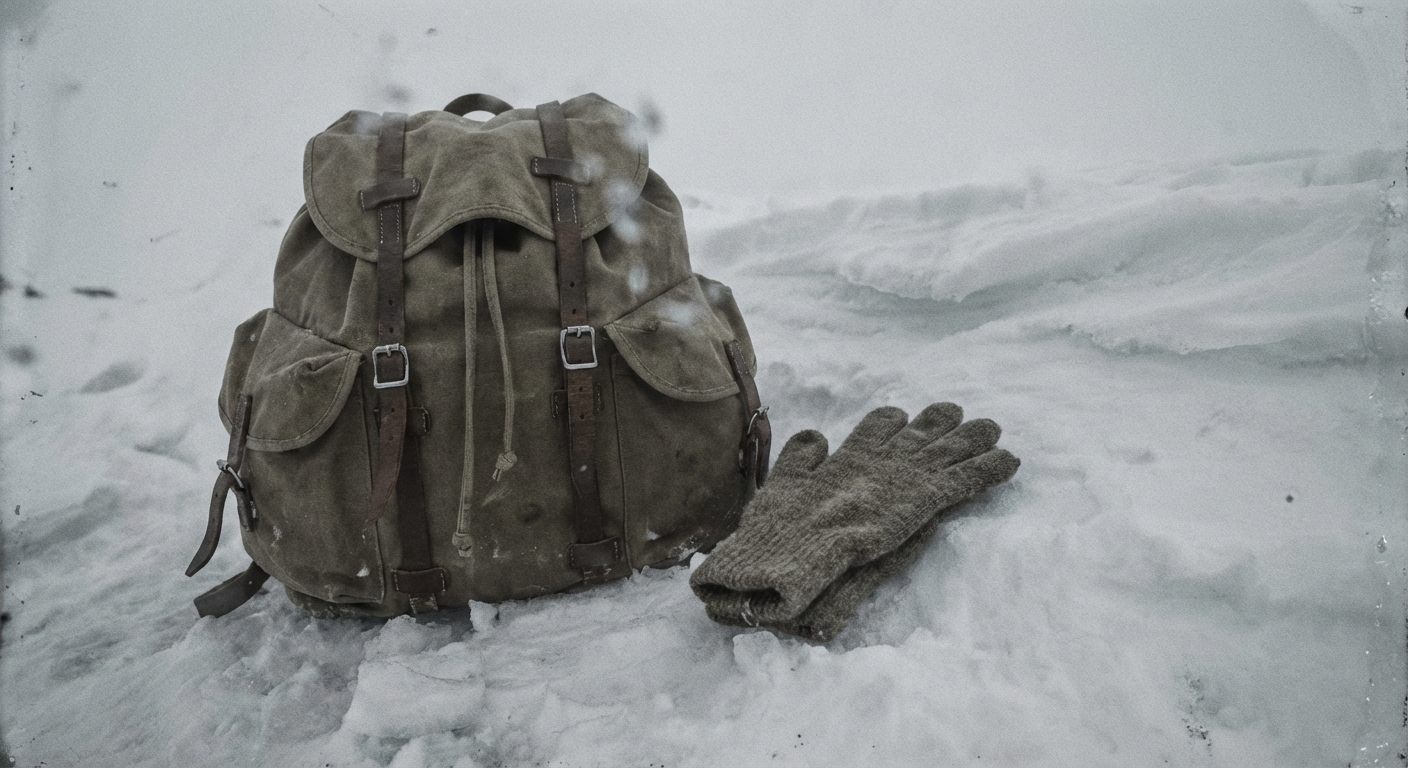
Below are the arguments people cite when they call the Dyatlov Pass story a cover-up. We treat the topic as a set of claims, not as established fact, and list each argument with where it originated and how it could be tested. The phrase “Dyatlov Pass cover-up claims” appears in public discussion and search queries, and is used here to define the scope of the review.
The original 1959 investigation recorded a mix of hypothermia and severe blunt-force trauma among the nine hikers, and closed with a terse conclusion attributing the deaths to a “compelling natural force.” That ambiguity—plus later reports of radioactive traces on some clothing, reports of unusual injuries, and the Soviet-era secrecy that followed—are the primary drivers of cover-up narratives. For the record, the official reopening by regional prosecutors in 2019 led to a public statement in 2020 that an avalanche is the likeliest explanation; independent scientific modelling published in 2021 produced a slab-avalanche scenario judged plausible by some researchers. These official and scientific items are discussed below alongside the cover-up arguments they intersect with.
The strongest arguments people cite
-
Argument: Some garments from the group tested positive for unusual levels of radioactivity, implying exposure to a military/nuclear source or a suppressed weapons-related incident.
Source type: Forensic/radiological readings reported in Soviet-era case files and later summaries; contemporary journalistic accounts and archival summaries.
How to test / verify: Locate original radiology laboratory protocols and measurement logs, re-evaluate preserved clothing or retained samples with modern dosimetry, and cross-check employment and residence records (e.g., ties to the Mayak site or the Kyshtym contamination zone) for those hikers whose clothing tested positive. Independent re‑analysis could distinguish background contamination, thorium from lantern mantles, occupational exposure, or fallout linked to historical incidents. -
Argument: Several victims had severe internal injuries (crushed chests, major skull fractures) without corresponding external wounds; proponents say only a high‑energy blast, close concussion (parachute mines), or deliberate violence could explain them, not ordinary falls or weather.
Source type: Autopsy summaries and forensic reports from 1959 as reproduced or summarized in later reporting and archives.
How to test / verify: Obtain the original autopsy and radiology reports, photos and measurement records; have modern forensic trauma specialists re-evaluate injury patterns using current standards (for blast, crush, and fall injuries). Biomechanical modelling (as used in some recent avalanche work) can estimate whether a slab avalanche or fall could cause these internal injuries without matching external trauma. -
Argument: Parachute‑mine or military weapons testing in the region around that time could produce loud lights, concussive pressure waves, and internal injuries without obvious external signs—suggesting an accident or cover-up by military authorities.
Source type: Historical records and secondary reporting noting military activity and weapons tests in parts of the Urals during the Cold War; eyewitness reports of orange lights in the sky in some contemporary accounts.
How to test / verify: Search declassified military exercise logs, flight/test schedules, and regional archive material for the precise period and coordinates. Examine residues on recovered items for explosive by‑products and compare witness statements and meteorological logs for corroboration. Archival confirmation that parachute mines or other tests were active in the immediate area and on those dates would materially strengthen the argument; absence of such records weakens it. -
Argument: The tent had been cut from the inside and the group’s footprints show only the hikers leaving in an apparently calm order; that pattern is interpreted as evidence they were forced out by a sudden threat or were prevented from returning—consistent with an external force or suppression of evidence.
Source type: Search team logs, scene photographs and witness statements collected during the 1959 rescue and in later summaries.
How to test / verify: Re-examine original scene photographs and search logs, compare with standard behavior studies of tent abandonment under smoke/avalanche/fear scenarios, and test alternate hypotheses (e.g., rapid tent exit to avoid suffocation from a stove, or leaving to find equipment buried outside). Behavioral context and a scene reconstruction using the original evidence would clarify whether the cuts and tracks are consistent with panic, planned exit, or staged disturbance. -
Argument: Missing soft tissue (reported missing eyes, a missing tongue) and later-discovered discoloration of skin have been presented as signs of either post‑mortem scavenging or a more violent/mechanical cause; some interpret these as indicating an attempt to erase evidence or a consequence of exposure to unusual forces.
Source type: Autopsy notes and later reporting that summarize the state of bodies found in May 1959.
How to test / verify: Consult the original autopsy descriptions, photographs, and pathologist commentary to determine whether the missing soft tissue is consistent with scavenging after prolonged exposure, with freeze‑drying and decomposition effects, with injuries inflicted by blunt internal pressure, or with post‑recovery handling. Modern forensic pathology can usually distinguish scavenging patterns from perimortem surgical removal or blast‑type tissue loss. -
Argument: The case was closed quickly and files were sealed during the Soviet era; proponents treat that secrecy and the short official explanation (“compelling natural force”) as evidence of an intentional cover‑up.
Source type: Original case record language, subsequent archival access patterns and later press conferences (including the 2019 reopening and 2020 statement).
How to test / verify: Track the chain of custody for case files, review which documents were withheld or redacted and why, and analyze official correspondence about the closure. Demonstrable redaction of incriminating evidence, or credible archival proof that investigative avenues were intentionally obstructed, would substantiate a cover‑up claim; routine Soviet secrecy and administrative errors are an alternative explanation that would not.
How these arguments change when checked
When supporters’ arguments are compared to primary documents and to recent scientific work, several recurring patterns emerge:
- Radiological findings are documented in summaries of the case and in multiple secondary sources, but the readings reported in public accounts vary in magnitude and interpretation. Investigators in 1959 recorded some elevated beta activity on a few garments; later sources note that at least one hiker had worked on cleanup after the 1957 Mayak/Kyshtym industrial accident, which provides a plausible occupational explanation. Modern commentators (and the 2019–2020 prosecutor review) pointed to thorium mantles and occupational exposure as alternative explanations that do not require a weapons‑testing event. The available published summaries do not prove a weapons test at the campsite; they show an anomalous radiological detail that needs primary-lab re-evaluation to be decisive.
- Severe internal injuries without matching external trauma are unusual but not unique. The 1959 autopsies described the pattern; modern biomechanical modelling (notably the 2021 Gaume & Puzrin paper) shows that certain slab‑avalanche mechanisms can cause heavy internal loading and crushing consistent with those autopsy notes. That modelling does not settle every question, but it reduces the evidentiary gap that historically motivated non‑natural explanations. Forensic reanalysis of the original autopsy files would be required to shift consensus further.
- Claims about parachute mines and other military tests are partly grounded in historical fact—there was military testing in broader parts of the Urals during the Cold War—but direct documentary proof that such tests occurred at the exact time and place of the Dyatlov group, and that they caused the injuries, is not published in the public record. That makes the hypothesis plausible as a line of inquiry but unproven as presented by many cover‑up narratives. Archival confirmation or residue analyses would be needed to strengthen this argument.
- Behavioral details (a tent cut from the inside, footprints belonging only to the group, flashlight left on) are consistent with panic or an urgent exit; they are not definitive proof of third‑party intervention. Multiple natural mechanisms (smoke from a failed stove, fear of a slab avalanche, an infrasound‑induced panic episode) have been proposed that could produce similar observable behavior. Each proposed mechanism has strengths and limits when compared to the primary scene evidence.
Evidence score (and what it means)
Evidence score: 42/100
- Several load‑bearing primary items exist (1959 autopsy summaries; radiological test summaries; search‑team photos and logs) but full original laboratory and chain‑of‑custody documents are not universally available in unredacted form.
- Independent scientific work (slab‑avalanche modelling, 2021) credibly accounts for many anomalous injuries and reduces the need to invoke extraordinary causes.
- Key anomalies (radioactivity on specific garments; unusual soft‑tissue findings) are real as reported, but their interpretation has plausible benign alternatives (occupational contamination; scavenging; decomposition).
- Soviet secrecy and case‑file closure increase uncertainty but do not—by themselves—prove a directed cover‑up tied to a specific alternative explanation.
- Crucial missing elements: verified chain‑of‑custody records for radiology samples; original autopsy photographs and forensic lab logs; and declassified military exercise logs for the precise coordinates and dates. Their absence lowers the documentation score.
Evidence score is not probability:
The score reflects how strong the documentation is, not how likely the claim is to be true.
This article is for informational and analytical purposes and does not constitute legal, medical, investment, or purchasing advice.
FAQ
Q: What is meant by “Dyatlov Pass cover-up claims” and why is that phrasing used?
The phrase “Dyatlov Pass cover-up claims” refers to assertions that authorities (Soviet-era or later) concealed relevant facts, or that the real cause involved military or secret activity that was intentionally hidden. We use the phrasing because it mirrors how these theories are commonly searched and discussed; this article treats those as claims and examines the supporting evidence and its sources rather than endorsing them.
Q: Were investigators wrong to rule the deaths a “compelling natural force” in 1959?
“Compelling natural force” was a brief administrative conclusion reflecting uncertainty. Later re-openings and scientific studies have proposed more specific natural mechanisms (e.g., slab avalanche) that could fit the scene; others point to unresolved anomalies that the 1959 record did not fully explain. Whether the 1959 investigators were “wrong” depends on evidence not yet publicly available in full primary form (detailed lab logs, full autopsy files). The modern prosecutor’s 2019–2020 review publicly favored an avalanche explanation.
Q: How reliable are the reports that some clothing was radioactive?
Multiple secondary sources and summaries reference elevated beta readings on a few articles of clothing. Those readings appear in archived summaries and have plausible alternative explanations—occupational exposure (some hikers worked at or near Mayak), contamination from lantern mantles containing thorium, or environmental fallout from the 1957 Kyshtym accident. The public record contains references to the measurements but not always the complete laboratory protocols; re‑examination of preserved items or original lab logs would be the clearest path to verification.
Q: If the scientific slab‑avalanche model explains the injuries, does that end cover‑up theories?
Not automatically. The 2021 modelling by Gaume & Puzrin showed a physically plausible mechanism that explains several anomalous features and reduces the need for exotic explanations, but scientific plausibility is different from archival proof. Cover‑up claims typically require documentary or material evidence of intentional suppression or malfeasance (for example, redacted files, destroyed evidence, or declassified documents showing military activity at the exact site and time). To resolve the controversy fully would require both robust forensic re‑examinations of the original materials and transparent archival disclosure.
Q: What would be the most decisive evidence for or against the cover‑up claims?
Decisive evidence would include any of the following: (1) unredacted, original forensic laboratory logs and autopsy photos that materially contradict public summaries; (2) preserved clothing or physical samples re‑tested under modern protocols showing contamination patterns inconsistent with occupational or environmental explanations; (3) declassified military records proving weapons tests of the relevant type at those coordinates and times; or (4) archival correspondence showing deliberate suppression or ordered destruction of investigative materials. Absent such items, the public record remains ambiguous.

Science explainer who tackles space, engineering, and ‘physics says no’ claims calmly.