
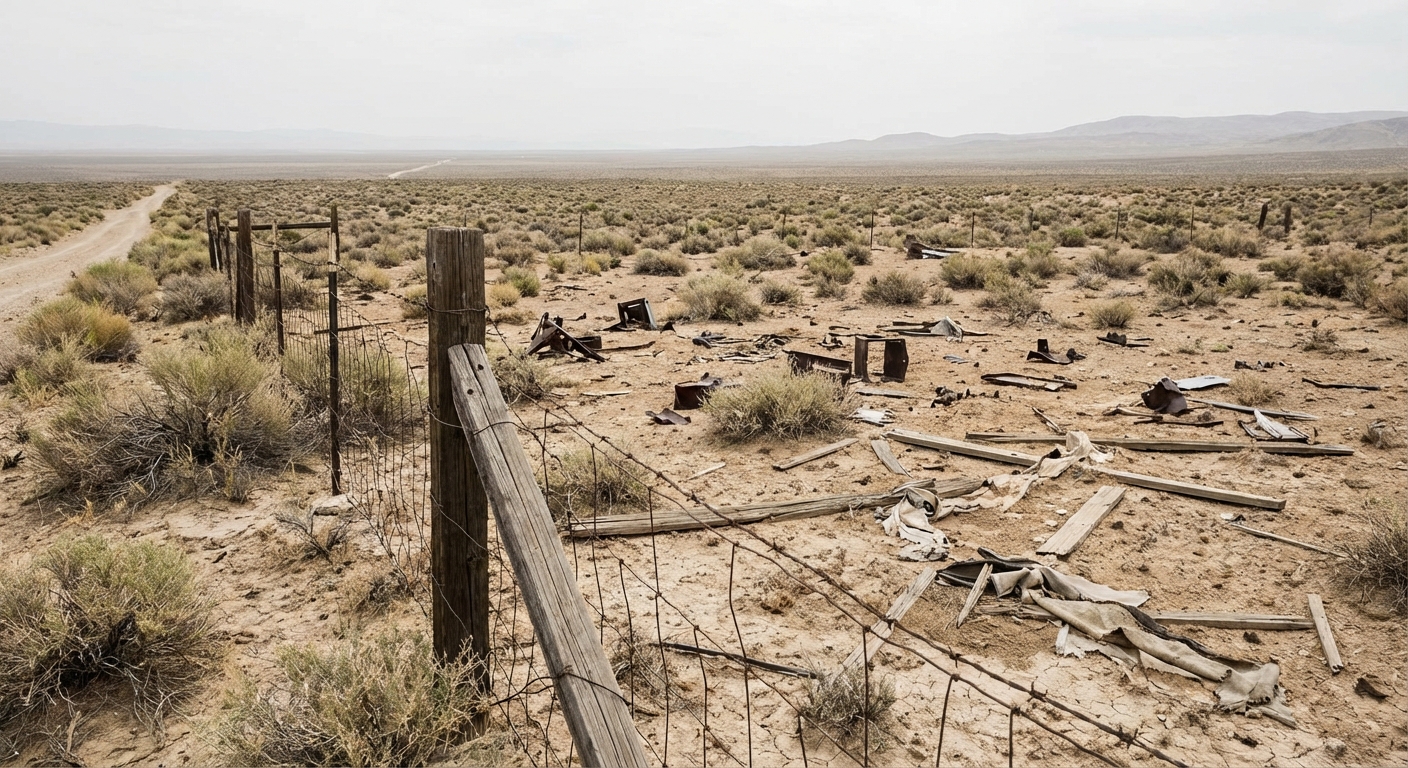
The claim commonly called the Roswell UFO crash-cover-up claims asserts that material and non-human bodies were recovered near Roswell, New Mexico in July 1947 and that U.S. authorities deliberately obscured the true nature of the event. This article treats the subject as a claim and examines the documentary record, official investigations, contemporaneous reporting, and later testimony — noting where sources agree, where they contradict each other, and where assertions cannot be verified.
This article is for informational and analytical purposes and does not constitute legal, medical, investment, or purchasing advice.
Verdict: what we know, what we can’t prove
What is strongly documented
– A Roswell Army Air Field press release on July 8, 1947 announced recovery of a “flying disc”; local newspapers (notably the Roswell Daily Record) published the story the same day. This contemporary public record is well documented in press archives.
– Within about 24 hours military spokesmen publicly stated the recovered debris was from a balloon; photos and statements from a July 1947 Fort Worth press conference show debris on display identified as a balloon or radar target. These rapid public changes in description are part of the documented historical record.
– In response to renewed public interest decades later, the U.S. Air Force published multi-part investigations in the 1990s concluding that the material most likely came from components of Project Mogul (a then‑classified balloon surveillance program) and that some later reports of “bodies” could be explained by high‑altitude test dummies and conflation with unrelated accidents. The Air Force reports (1994, 1997) and related archival research are publicly available and form the official government explanation.
What is plausible but unproven
– It is plausible that initially classified or sensitive programs (including Project Mogul) made public explanation difficult and that a simple “weather balloon” line was offered quickly either from confusion or to avoid revealing sensitive operations; Project Mogul was classified in 1947 and some program details were appropriately withheld at the time.
– Witness accounts reported decades later (for example interviews with Major Jesse Marcel, Lt. Walter Haut’s later statements, and multiple civilian witnesses) describe unusual materials and, in some testimonies, alleged biological remains. These recollections are plausible in that people did report seeing and handling odd debris; however, their late emergence, discrepancies in timing and detail, and the absence of preserved primary physical samples mean those eyewitness claims remain unproven on documentary or forensic grounds.
What is contradicted or unsupported
– Claims that the government knowingly recovered one or more intact extraterrestrial vehicles and multiple alien bodies, then concealed them as part of a successful long-term cover-up, are not supported by verifiable official records released to date. The multi-volume Air Force investigations found no documentation of recovered extraterrestrial craft or occupants; where testimony suggests bodies, the Air Force report offers alternative explanations and notes the lack of contemporaneous records supporting bodies recovered in 1947.
– Specific technical claims about unique non‑terrestrial alloys or impossible materials have not been demonstrated with authenticated, independently analyzed samples in the public record. Reports that physical samples of alien materials were handled by named officials but never produced for independent testing remain assertions without verifiable chain-of-custody documentation in public archives.
Evidence score (and what it means)
Evidence score: 42 / 100
- Contemporaneous documentation (press release, newspapers, Fort Worth press conference photos) is strong and scores positively because primary sources exist.
- Official archival research and Air Force reports (1994 and 1997) provide detailed institutional analysis and lower the need to infer extraordinary claims, which reduces the score for extraterrestrial interpretations.
- Key supporting evidence for extraordinary aspects (authenticated physical samples subjected to independent forensic analysis; contemporaneous official records documenting alien bodies or non‑terrestrial technology) is absent from the public record, which substantially lowers the score.
- Numerous eyewitness accounts emerged decades after 1947, sometimes with inconsistent details; late testimony lowers reliability relative to contemporaneous records.
- Some aspects (existence of Project Mogul; classification of programs in 1947) are documented and explain why information was limited then; this narrows but does not eliminate gaps.
Evidence score is not probability:
The score reflects how strong the documentation is, not how likely the claim is to be true.
Practical takeaway: how to read future claims
– Check whether a claim is supported by contemporaneous primary documents (official memos, photos with metadata, archived press releases) or only by later recollections. Contemporary, dated records carry more evidentiary weight than memories recalled decades later.
– Ask for provenance and independent analysis before accepting material‑evidence claims. If physical samples are cited, responsible reporting should show chain‑of‑custody, unbiased laboratory results, and peer‑reviewed documentation.
– Treat official secrecy and classification as explanations for gaps, not as proof of extraterrestrial activity. Secrecy can produce cover stories and confusion without implying a cover-up of non‑earthly technology; verify which elements were actually classified and which were later declassified.
FAQ
Q: Did the Roswell Army Air Field really say it recovered a “flying disc”?
A: Yes. A July 1947 RAAF press release used language that newspapers reported as a recovered “flying disc”; that press release and contemporaneous newspaper coverage are primary historical records. Later the base issued or amplified a weather‑balloon explanation.
Q: What did the Air Force finally conclude in its investigations?
A: In two 1990s reports the Air Force concluded that the Roswell debris was most consistent with parts of a Project Mogul balloon array and that reports of bodies were plausibly explained by later memory conflation and the recovery of anthropomorphic test dummies used in later decades; the reports state no evidence was found of extraterrestrial craft or occupants in the official record. Those reports are lengthy and cite interviews, archival documents, and technical files.
Q: Why did the story become a UFO legend in the 1970s and 1980s?
A: Interest revived after researchers interviewed veterans like Major Jesse Marcel in the late 1970s; popular books and television programs amplified these interviews and introduced additional eyewitness claims. The social context (post‑Watergate skepticism, cultural fascination with UFOs) contributed to wide public uptake of the claim.
Q: Is there any verified physical evidence that remains outside official control?
A: No authenticated physical evidence with an unbroken, independently verifiable chain of custody proving non‑terrestrial origin is available in the public record. Many alleged samples have not been produced for rigorous, peer‑reviewed forensic analysis with traceable provenance.
Q: Could future declassifications change this verdict?
A: Yes. If previously classified documents, authenticated physical samples, or reliable contemporaneous records showing materially different facts are released and independently verified, the assessment should be revised. At present, the public documentary record does not contain direct proof of extraterrestrial craft or bodies.

Geopolitics & security writer who keeps things neutral and emphasizes verified records over speculation.